
Organic Free-Range Human Thoughts
Real strategic thinking comes from experience, judgment, and independence. With proven expertise and an outside vantage point, Big Left helps leaders make the decisions that move business forward.
Based in the Pacific Northwest, working with organizations beyond it.

When the Stakes Shift
There are moments in the life of an organization when the stakes change.
Sometimes it’s growth that introduces complexity — expansion outpacing structure, capital moving faster than governance, leadership bandwidth thinning under scale.
Sometimes it’s contraction — revenue sliding without a clear cause, margins compressing, confidence eroding internally while the external messaging stays steady.
Sometimes it’s a pivot — a market shift, a strategic redirection, a technology bet, a restructuring that will alter the organization at its core.
And sometimes it’s an oh sh*t moment that arrives without warning.
What all of these moments share is consequence. Decisions made in these phases compound quickly. The cost of misreading the situation is rarely visible immediately, but it is always real.
From inside the system, perspective narrows. Emotion increases. Incentives collide. Internal politics distort clarity.
That is when outside judgment matters most.
Big Left steps in when the stakes are high and the margin for error is thin. The work is not about growth alone. It is about structural integrity under pressure.
That is a different discipline.

Organizations in Motion
Big Left works with leaders who have already built something substantial. The product has traction. The service delivers. The market has responded. What was once experimental is now operational, and what was once flexible is now carrying responsibility.
At this stage, the questions change. The focus shifts from proving viability to strengthening durability. Leadership teams begin navigating decisions that affect payroll, investor confidence, regulatory exposure, long-term positioning, and institutional trust. Growth is no longer theoretical. It has consequences.
This is second- and third-phase decision territory, where sequencing matters and capital must move with intention. Structural weaknesses that were manageable at an earlier stage begin to surface under increased demand. What once felt agile can begin to feel strained.
If you are responsible for something that impacts other people’s money, stability, or reputation, you understand the weight of that reality.
This is where perspective matters.

Pitch Deck & Business Plan Review
Most founders never find out why they were passed on. They assume it was the market, or the timing, or luck. Usually it was the deck, or the plan behind it, and nobody in the room said so out loud.
An untested idea rarely survives its first real question.
A market claim nobody would defend rarely survives diligence.
A deck that loses a room in ninety seconds rarely gets a second one.
A weak point caught early is a weak point that gets fixed.
Big Left has sat on the investment committee side of the table long enough to know exactly where decks and plans actually fall apart.
If you are about to walk into a room with real money on the line, this is where to start.
The Strategic Working Session
You are not building from scratch. You are operating something that already exists in the real world, with real employees, real capital, and real expectations attached to it. The foundation has been laid. The proof is there.
What changes at this level is the weight of decisions.
A pricing shift affects payroll.
A hiring choice reshapes culture.
A capital decision alters trajectory.
A strategic pivot impacts more than one quarter.
The margin for casual thinking narrows.
Leadership at this stage is less about inspiration and more about calibration. Information is incomplete. Time is limited. Internal incentives are layered and, at times, competing. Even strong executive teams can find themselves circling decisions longer than they should.
This is where outside perspective becomes valuable — not because the leadership lacks intelligence, but because proximity distorts clarity. When you are inside the system, you carry its history, its relationships, and its internal gravity.
Big Left enters without that gravity.
If the decisions in front of you will materially affect the future of the organization, you understand why that matters.
Project Engagement
Some organizations know from the outset that what they are navigating extends beyond a single conversation. The scale of the shift, the complexity of the transition, or the stakes attached to the outcome require sustained, structured involvement.
A company-wide pivot.
A revenue correction that demands disciplined intervention.
A leadership realignment with material consequences.
A structural redesign that will define the next phase of the organization.
In these situations, Big Left engages at the project level.
The work is defined by clarity of scope and executive accountability. It is not exploratory. It is not indefinite. It is built around resolving specific structural challenges with measurable impact.
Engagements are evaluated carefully to ensure alignment and readiness on both sides. Not every situation is a fit.
When it is, the work is direct and focused.
If you are navigating something that cannot afford imprecision, submit a Project Inquiry.

The Founder
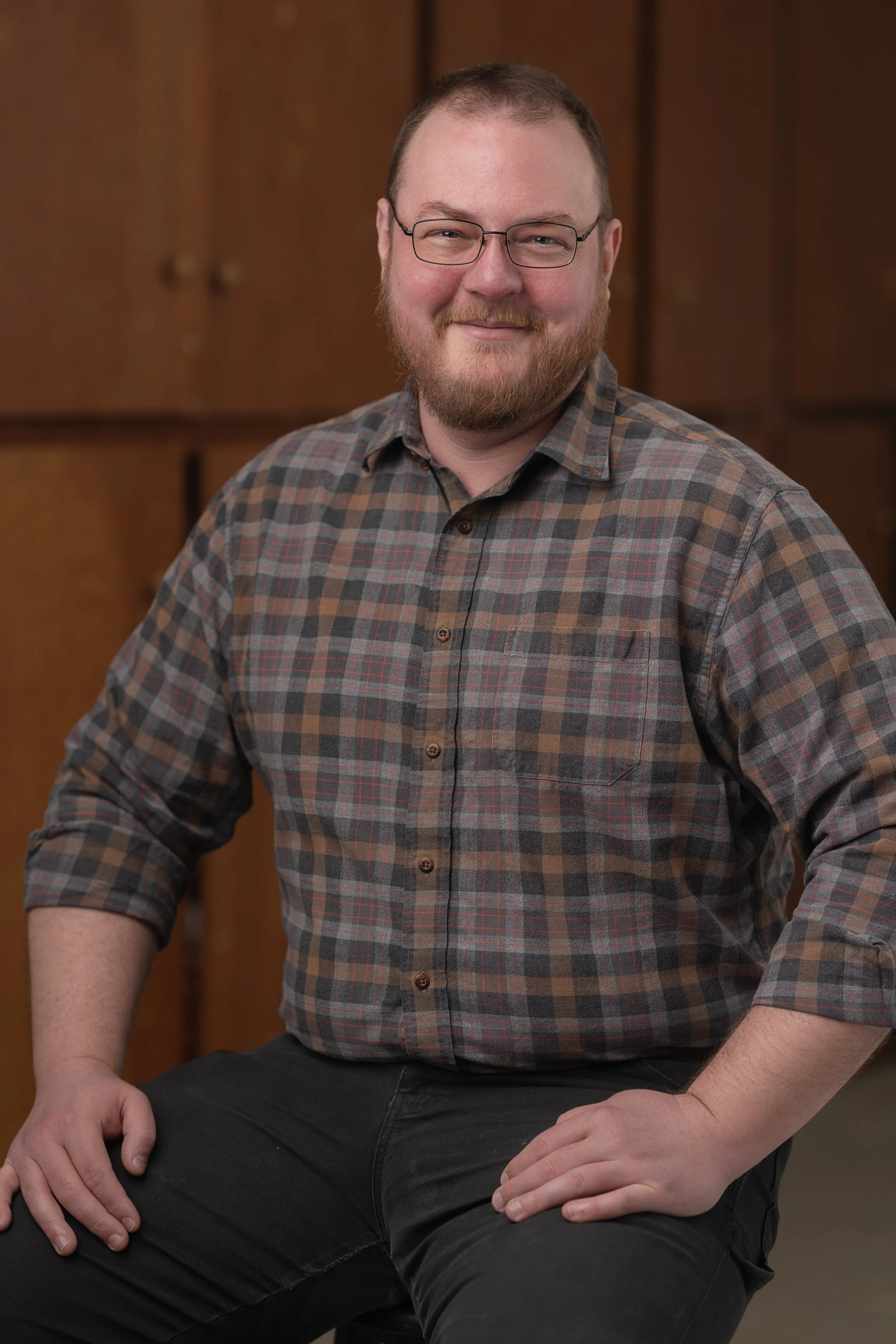
Big Left was founded by James P. Ellis, whose career spans engineering, public-sector leadership, nonprofit development, high-growth consulting, and deep-technology finance. He has overseen major public capital budgets, built and scaled organizations from the ground up, and guided executive teams through major periods of structural transformation.
His academic foundation, laddened with degrees in civil engineering and public administration, which in turn informs how he approaches systems: analytically, structurally, and with long-range consequence in mind.
What distinguishes his work is pattern recognition developed across a vast number of industries and consulting for Fortune 100 companies. He understands how organizations behave under pressure and where they quietly break when growth, contraction, or change outpaces design.
Big Left operates from that vantage point.
You can learn more about the founder here.
Begin
Serious decisions deserve serious thinking.
A Strategic Session provides direct, independent perspective on a specific question or inflection point.
A Project Engagement is appropriate when the work requires sustained structural involvement.
A Deck Review is appropriate when you are preparing to raise and need to know whether the plan and the pitch will actually hold up.
All three paths are deliberate. None of them are casual. Each one can be a major game changer.
If the situation in front of you carries weight, select the path that matches it.
Questions? We got answers